
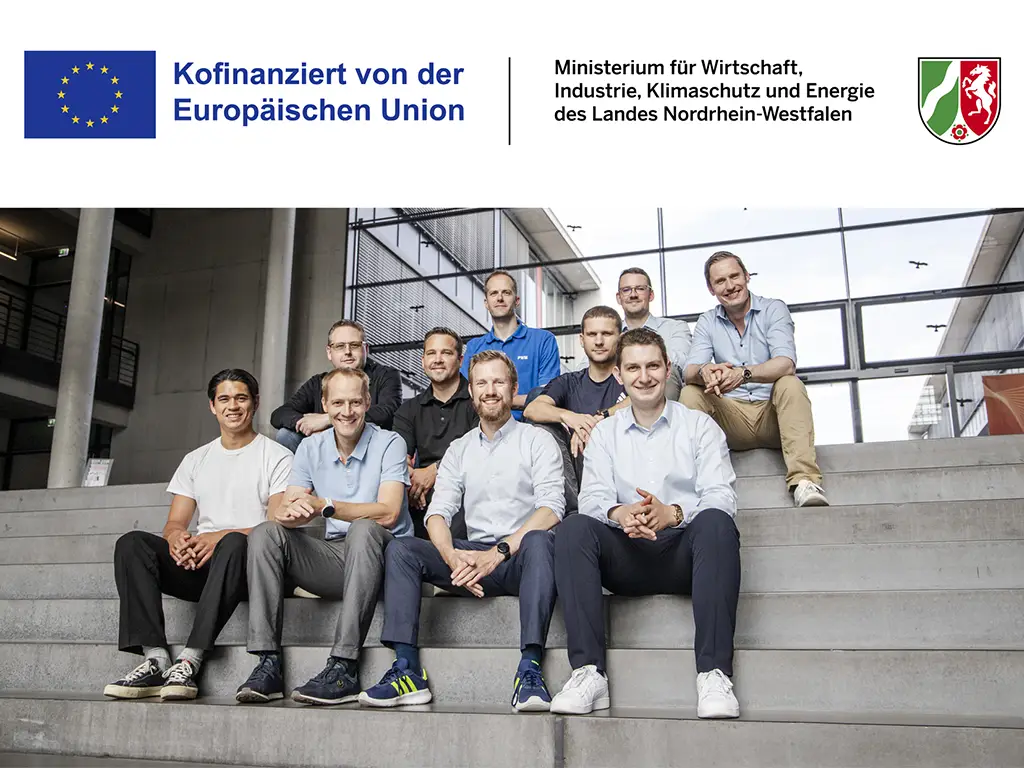
Implementation of efficient service processes using AI assistants in SMEs
In a collaborative project between TH Köln and the companies Maintastic, IconPro–A.I. Solutions, and PWM, WMV is contributing its expertise in industrial plant automation. The goal is to develop AI-based assistance systems for industrial services. WMV is playing a central role in this effort.
WMV provides real-world digital data and use cases from live operations for the development of AI-powered assistance systems for industrial service and maintenance processes. These serve as the basis for anomaly detection and predictive maintenance of machines and systems. To ensure that the results can be directly incorporated into the development of user-friendly AI assistants, they are tested and validated in industrial settings in collaboration with the project partners.
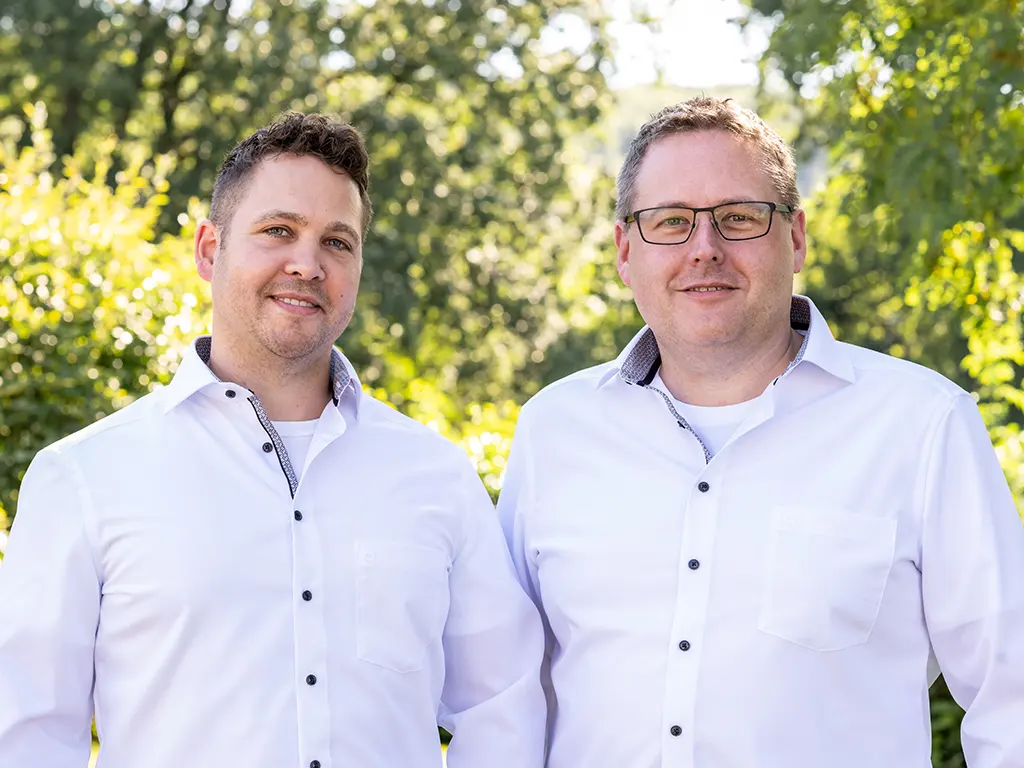
“With our research contribution we are making an important share to economic and social cohesion in the region – and beyond,” said Christian Hertel and Benjamin Häfner of WMV. As part of the WMV innovation team, these experts in automation and IT solutions are bringing their application and system expertise to the project. Here, they answer the most important questions about KI-ssist.
What is KI-ssist?
KI-ssist is the name of the research project funded by the European Union’s ERDF (European Regional Development Fund) and the EFRE/JTF (Just Transition Fund in NRW). Participants in the project include TH Köln, as well as the companies WMV from Windeck (mechanical engineering and automation, surface treatment), Maintastic (CMMS software), and IconPro – A.I. Solutions (software and AI for predictive maintenance) from Aachen, and PWM from Bergneustadt (electronic price displays for gas stations).
The goal of this collaborative effort is to pool the respective expertise and develop AI-based assistance systems for industrial service and maintenance processes in SMEs under realistic conditions. This will be achieved by
- intelligent linguistic and technical support during service calls
- interactive use of predictive maintenance (“Ask the Agent”)
- use of machines and process data for predictive maintenance
- development of robust anomaly detection (reduction of false alarms through `fingerprints`)
- integration of secure and privacy-compliant data architectures
How long will the KI-ssist project run?
The KI-ssist project will run for a total of 3 years. The project began on June 1, 2025.
What are the challenges of the KI-ssist research project?
The KI-ssist research project addresses several key challenges that arise particularly in industrial services and data-driven maintenance:
- Language and knowledge barriers in the service process
Service technicians and operators often have different levels of technical knowledge and may speak different languages. This can lead to misunderstandings when describing problems, documenting service cases, or using technical documentation. - Inadequate use of existing data
Many facilities already have extensive data on hand (e.g., from PLCs or service tickets), but this data is rarely used systematically for predictive maintenance or fault analysis. - Complexity in the Analysis of Operational Data
Interpreting machines and processing data often require expert knowledge. Service technicians and operators lack intuitive tools to quickly answer data-driven questions. - Difficult identification of relevant anomalies
In industrial processes, many fluctuations occur in measurement data. It is difficult to differentiate which deviations actually indicate problems and which are part of normal operation. - High requirements for data protection and data security
Especially in service cases (tickets, conversations, personal data), solutions must be designed to ensure that sensitive information is protected and processed securely.
How did the partnership between WMV and TH Köln come about?
As a member of the Innovation Hub Bergisches Rheinland at the B7 Campus, WMV has maintained close ties with TH Köln for more than five years. For the KI-ssist research project, Prof. Dr. Eike Permin from the Faculty of Computer Science and Engineering and the Institute of General Mechanical Engineering (IAM) approached WMV representatives at the Innovation Hub. “We were immediately enthusiastic and agreed to offer our support,” said Christian Hertel and Benjamin Häfner.
What contribution is WMV making to the project?
WMV makes a practical contribution to the KI-ssist project by bringing in real-world applications from machine and plant service. To develop predictive maintenance approaches under real-world conditions, PLC and plant data from the WMV Research & Development Center are utilized. In addition, we support the user-friendly implementation and validation of AI systems during ongoing operations.
“With our extensive domain expertise in maintenance, service, and plant operations, we ensure that the solutions we developed can be deployed in real-world industrial environments as well as well as sector-independent industries.”
Christian Hertel
What exactly is WMV’s contribution to the project, or specifically in the use case?
- For this use case, we collect real-time PLC data, specifically, input signals from sensors and output signals from actuators and enter this data into predictive maintenance models at fixed intervals. Our contribution: establishing a link between the PLC data and existing or to-be-trained AI models. The focus here is on robust technical integration.
- In addition, we are working with PWM to support the user-centric development of LLMs (Large Language Models). In this context, glossaries and manuals are to be integrated. The tickets – that is, the digital records that document every inquiry, issue, or service request from a customer or employee – should be created by service technicians for service technicians, not by system administrators.
- In cooperation with PWM, we are also developing a plant/process “fingerprint” against which current measurement values are checked. The goal is to distinguish genuine anomalies in plant operation from normal noise and to filter out non-critical fluctuations. The result is earlier and more targeted indications of deviations.
“For us, the user-oriented optimization of voice control is crucial. Only then will AI assistants truly be practical for use in customer service. In combination with the continuous evaluation of live measurement data, this creates in an intelligent application that recognizes patterns, supports users, and makes existing data significantly more usable and secure.”
Benjamin Häfner
What added value does the KI-ssist project create for SMEs?
KI-ssist develops solutions for improved data usage that are accessible even to companies with limited IT resources, while simultaneously meeting high data requirements. Thanks to the AI assistants, problems can be identified and resolved more quickly, and issues can be detected early to prevent downtime.
“From the very beginning, it was important to us to incorporate our customers’ actual needs into the project at an early stage and to ensure that we didn’t develop future-proof solutions without taking our customers’ needs into account.”
Christian Hertel and Benjamin Häfner
Which project goals have been achieved so far (as of early April 2026)?
Together with our project partner Maintastic, we carried out initial language optimizations of the LLMs from a mechanical engineer’s perspective. At the WMV R&D Center, we were able to “translate” initial live data and insights from older tickets into user-optimized tickets. The focus was on specific use cases, such as “What is the problem”, “What is the solution”, and concrete anomaly detection. Since the end of 2025, we have been testing a beta version at WMV R&D Center.
We are currently on schedule with the project plan, and even after almost a year, we are still passionately committed to it. “Without new developments”, says Häfner, “we’ll be treading water or moving backward”. “Now more than ever, we in Germany and the EU are more challenged to launch our own independent innovations and take the lead ourselves”, says Hertel. That is exactly what impels WMV. For this, we were honored as a TOP 100 Innovator in 2025.
In the coming months, we will provide regular updates on the project’s progress, share insights into the development steps, and present initial results from practical application. This will make transparent how real-world applications are transformed into concrete solutions for industrial services in SMEs.

Christian Hertel
Head of Automation & Innovation / Member of Management WMV
Christian Hertel combines technology, strategy, and implementation with a clear focus on automation, industrial AI, digitalization, and Industry 4.0.
His goal: Innovative solutions that boost efficiency, enable new value creation, and position medium-sized industrial companies for a sustainable future.
His focus areas: Automation and software in industrial settings, data-driven services such as predictive maintenance and the development of digital business models.
His approach: consistently practice-oriented
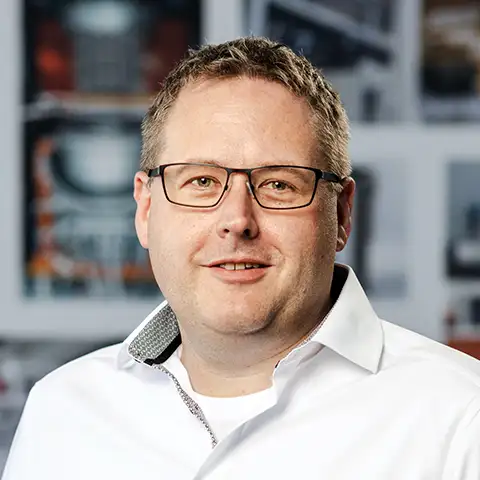
Benjamin Häfner
Head of IT & Innovation | Member of the Management Board WMV
Benjamin Häfner combines IT strategy, innovation, and industrial applications with a clear focus on secure digitalization, AI-powered assistance systems, group-wide system integration, and the further development of high-performance software solutions.
His goal: IT and innovation solutions that simplify service and maintenance processes, make existing data securely usable, reduce cyber risks, and efficiently connect the WMV Group both nationally and internationally.
His focus areas: group-wide IT responsibility for WMV, the expansion and support of in-house IT, the further development of proprietary software solutions, cyber and AI security, as well as the procedural integration and connection of the U.S. business.
His approach: secure, user friendly, and consistently practice-oriented.
